
Rains County Sex Offender Checks
The Texas Public Sex Offender Registry is the main public source for a Rains County check. Texas DPS manages the statewide database under Code of Criminal Procedure Chapter 62. It receives data from the local authority that registers and verifies each person. A county filter can bring together public entries tied to Emory, East Tawakoni, Point, and unincorporated parts of Rains County. A name search is better when the person is known. An address, city, ZIP, radius, or map search is more useful for community awareness near a home, school route, or other place.
Start with enough facts to avoid a false assumption. Compare the listed name, aliases, photograph, age, physical traits, address, and registration authority. The profile reports a legal registration record, not a forecast of future conduct. It also does not show every fact held by law enforcement. Follow any national result back to the Texas source so the current Rains County profile and its status can be checked.
The official DPS registry landing page shows the public entry point used for a Rains County sex offender lookup.
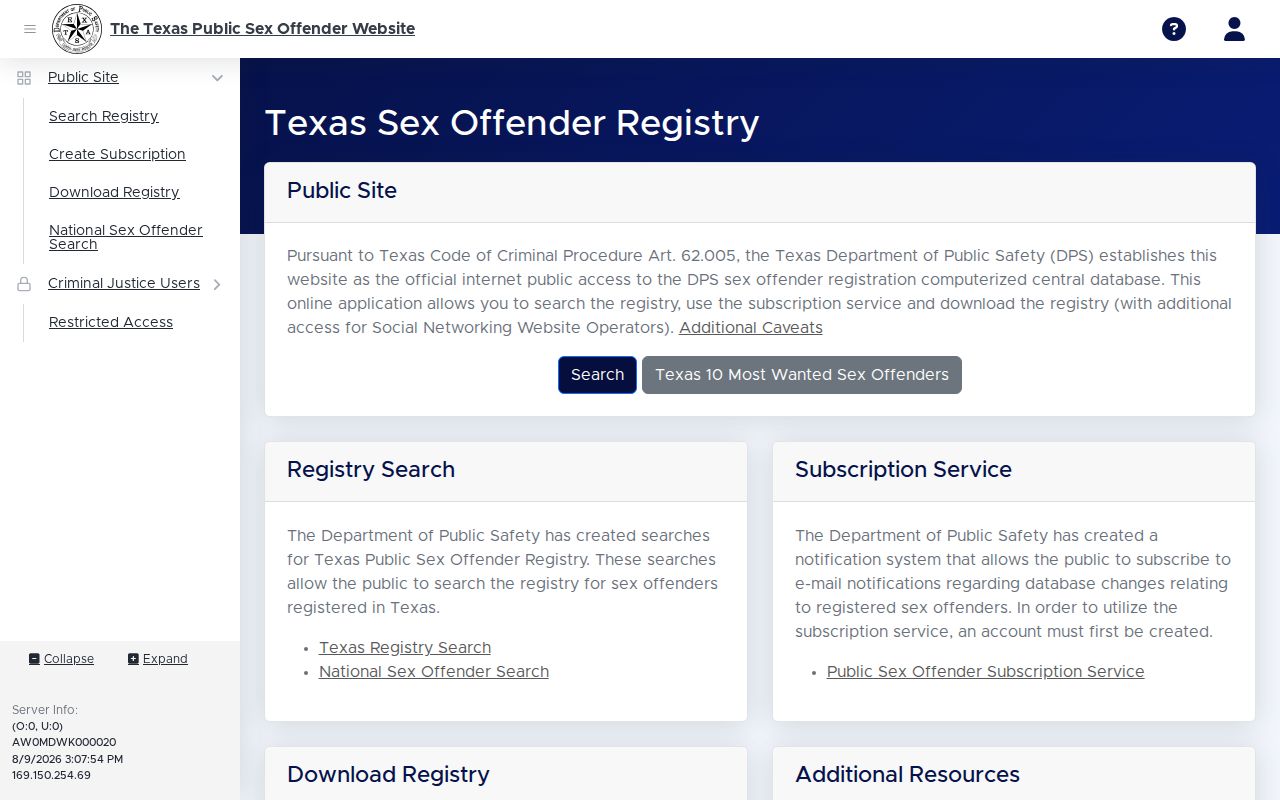
That state page is the right starting point because local registration data flows to DPS for public display.
Texas Public Sex Offender Registry Searches
The public search has separate ways to look by name and by place. It also offers map-oriented tools and, when available in the current interface, subscription or notification controls. Use the fewest fields needed to obtain a useful result set, then narrow it. A strict spelling can miss an alias, while a broad last-name search may return people from well outside Rains County.
- Open the Texas registry and read its conditions of use before entering a query.
- Choose a name search for a known person, or select location and enter an address, city, county, or ZIP.
- Use the radius or map control when the goal is to review a defined area in Rains County.
- Open a likely profile and compare multiple public identifiers, the registration authority, status, and offense information.
| Field or Control | Type | Required | Use |
|---|---|---|---|
| Last Name | Text | Query-dependent | Starts or narrows a name search |
| First Name | Text | No | Separates people with the same surname |
| Address | Text | Query-dependent | Centers a place-based search |
| City | Text or dropdown | No | Narrows results to a Texas city |
| County | Dropdown | No | Select Rains for countywide results |
| ZIP Code | Text | No | Uses a five-digit area |
| Radius or Map | Dropdown or map | Location search | Browses around a chosen point |
The DPS registry search screen displays the fields used to narrow Rains County registry results.
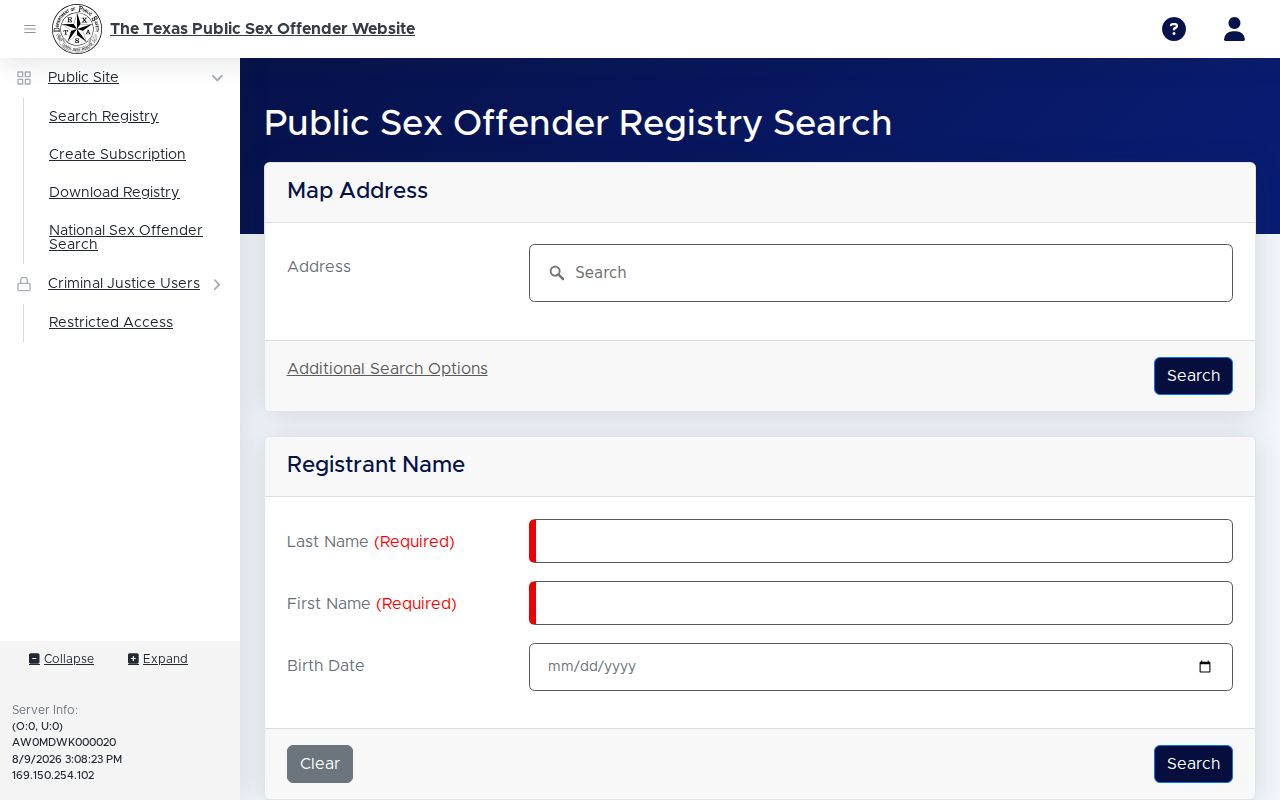
The range of controls lets a reader change methods when an exact name search does not answer the location question.
Rains County Registry Map Search Choices
A county selection and a map search answer different questions. Selecting Rains County produces a broad list tied to the county. An address and radius focus on one point, while city and ZIP fields can cross or miss municipal boundaries. The Lake Tawakoni area makes that distinction practical. East Tawakoni is a municipality, yet nearby addresses may fall outside it. A county filter is useful as a first pass, followed by the map for the exact area.
Search results can change as a person reports a move or an authority updates a status. Save the profile's DPS or SID identifier when following up, since names and addresses can change. If the interface offers an alert subscription, use the current on-screen terms and address controls. Do not assume a saved screen image remains current. Run a fresh Rains County registry search when the timing matters.
Registry Profiles: What They Show
A public Texas profile combines identity clues, the registration record, and facts about the qualifying offense. Read it as a set. A shared name alone is not enough. The status, photo, age, physical details, address or location, and the listed Rains County or city authority help distinguish one record from another. Offense text reflects the registration basis, while sentence and date fields supply legal context.
| Name and aliases | Reported names linked to the public registration identity |
|---|---|
| Photo and description | Photograph, sex, race, age or birth date, height, weight, hair, and eyes |
| Address or location | Public residence or location information and the registration authority |
| Offense details | Description or statute, conviction or adjudication date, victim age category, and sentence |
| Registry duties | Status, risk label, verification requirement, and registration start or end information |
| Other public facts | Scars, marks, tattoos, and qualifying vehicle or institution details when applicable |
One profile can change after verification, a move, a court order, or a correction. For that reason, a current DPS view has more value than an old copy shared elsewhere.
Rains County Sex Offender Profile Privacy
Chapter 62 makes most registration information public, but it draws firm privacy lines. A public Rains County profile does not disclose a Social Security number, driver's-license number, telephone number, online identifiers, employer details, victim-identifying information, or added DPS-only data. Some juvenile material is also restricted. The absence of one of those fields is deliberate, not a sign that the search failed.
If a public detail appears wrong, do not try to repair it through a third-party directory. Note the profile identifier and the exact field. A registrant should work through the registration authority and DPS procedures. A member of the public may report a concern to the listed authority. The office can determine whether the source record needs review, whether the profile has a pending update, or whether the public display is correct under Texas law.
Note: A registry profile omits protected facts even when the Rains County registration authority may lawfully hold them.
Registration Levels and Duties in Texas
Texas uses offense-based duration rules and profile risk concepts. It does not turn every public record into the federal Tier I, II, or III display. A reader should use the actual Texas duration and risk label rather than assign a tier. Verification frequency also depends on the governing rule and profile. Registrants must verify on schedule and promptly report specified changes.
| Texas Category | General Duration | Public or Notice Effect |
|---|---|---|
| Adult lifetime offense | Life | Public profile under Chapter 62 when releasable |
| Other adult qualifying offense | Generally ten years after release from incarceration, parole, or community supervision | Public profile during the registration term |
| Civilly committed or high-risk registrant | As the controlling registration rule provides | DPS postcard notice to the immediate community in English and Spanish |
| Juvenile registrant | Special Chapter 62 provisions | A court may make registration nonpublic or grant qualifying relief |
The Texas Sex Offender Registration Program overview explains the state and local duties behind Rains County registry entries.
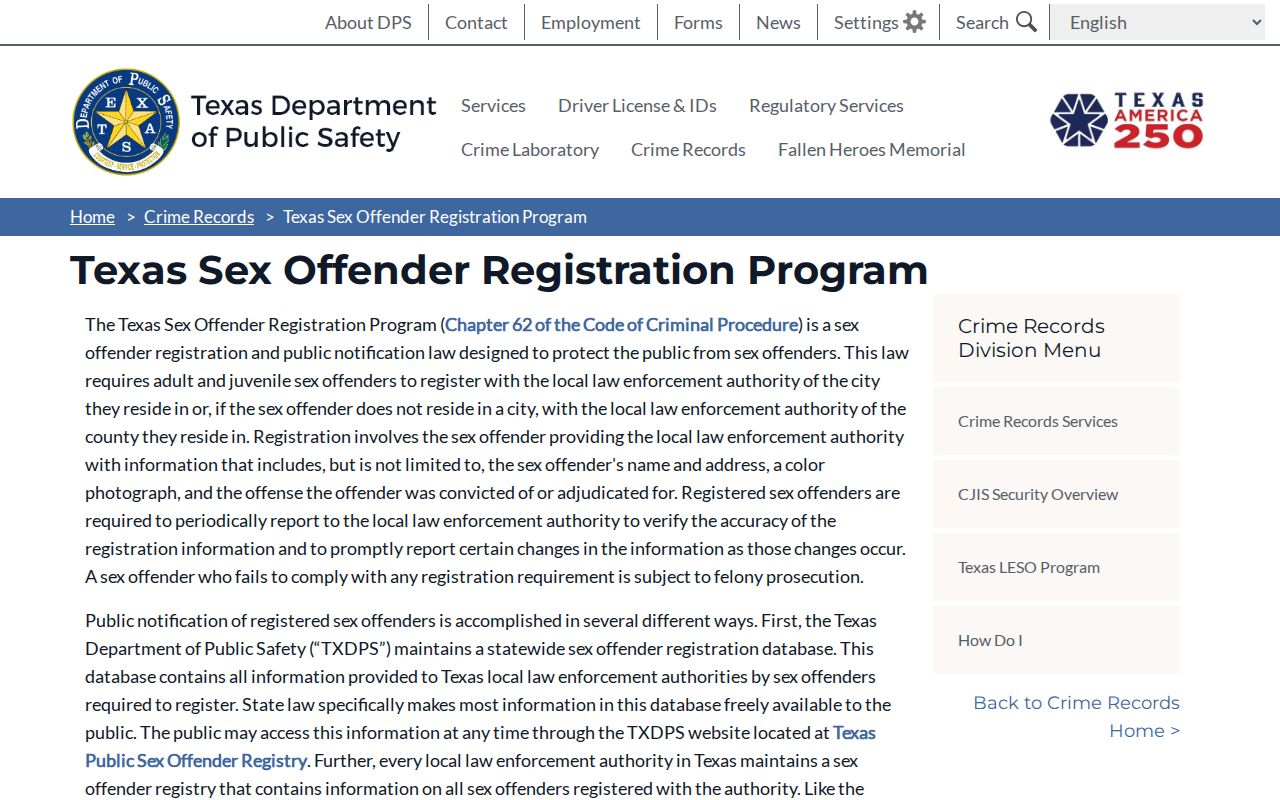
The program page helps separate the legal duty to register from the smaller set of facts shown on the public profile.
Rains County Registry History and Risk Labels
Texas registration began on September 1, 1991. The state's retroactivity rules generally reach a qualifying conviction or adjudication on or after September 1, 1970 when the person remained in the justice system for that offense on or after September 1, 1997. Those dates explain why an older Rains County case can still support a current profile. They do not create a simple age cutoff for every case.
Registration is due no later than the later of the seventh day after arrival or the first date that local policy permits. A person must then verify as required and report specified changes without delay. Failure to comply is a felony. Risk language on a profile should be quoted as shown. It should not be replaced with a federal tier guessed from the offense name, nor treated as a personal prediction.
Rains County Registry and NSOPW
The National Sex Offender Public Website provides a cross-state layer maintained by the U.S. Department of Justice. It is useful when a search may extend beyond Rains County or Texas. NSOPW gathers results from participating jurisdictions, but the source jurisdiction remains the place to read and verify the full record.
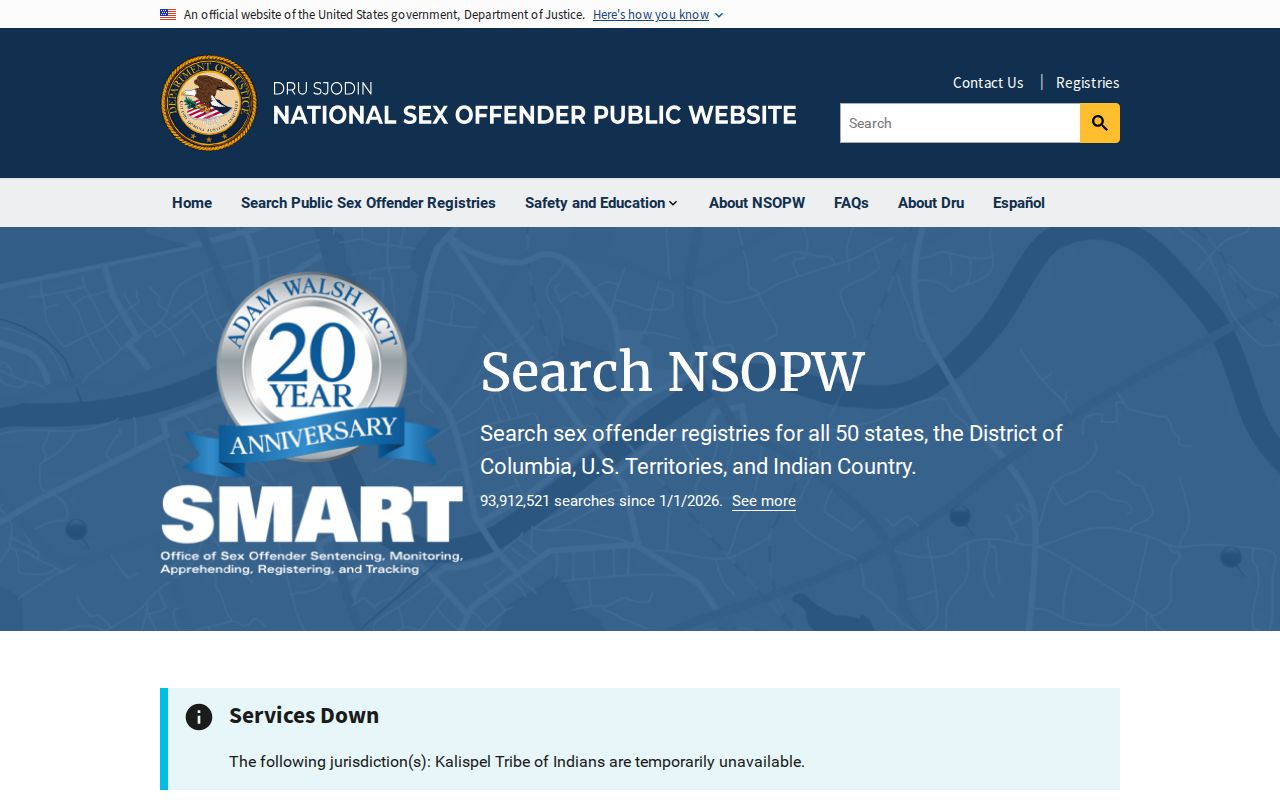
A national hit should lead back to the Texas profile, where the current registration authority, status, and state-specific duties can be reviewed.
For a person known to have lived in more than one state, begin with NSOPW and follow each result to its official registry. For a neighborhood question centered in Rains County, the DPS county and map tools are more direct. Neither system should be used as a substitute for emergency help or an agency report.
Using Registry Information Lawfully
Registry information exists for public notice, community awareness, and sound safety choices. Texas may add direct notice in certain cases, including DPS postcards for a civilly committed or high-risk registrant who moves into an immediate area. That notice is in English and Spanish. The public profile and a notice do not grant anyone the right to enter private land, contact a listed household, or take enforcement action.
Suspected noncompliance at an unincorporated Rains County address should go to RCSO. Inside a city, contact its police department. DPS Sex Offender Registration can also be reached at 512-424-2800 when state-level direction is appropriate. Give the profile identifier, location, and the conduct observed. Do not confront the person. Call 911 for an immediate threat.
Registry misuse is a crime: Texas Code of Criminal Procedure Chapter 62 governs public registry use. Threats, harassment, intimidation, or vigilantism based on registry information may lead to criminal prosecution.
No official countywide residency-distance ordinance was found in the reviewed Rains County sources. Do not assume a distance rule based on another county or city. Ask the correct city or county authority about a specific local rule, and rely on Chapter 62 and the current profile for the state registration facts.