
Criminal Court Cases in Rains County
Rains County divides criminal case files by offense level. The 8th Judicial District Court hears felony matters. District Clerk Laura Pate keeps those files at the District Clerk's office, 220 W. Quitman Street, Suite C, Emory, Texas 75440. The counter is open Monday through Friday from 8:00 a.m. to 5:00 p.m., though the noon lunch period may vary. Call 903-473-5000 extension 101 before a records trip. Filed felony materials may include an indictment, motions, docket entries, plea papers, judgment, sentence, and later orders.
The constitutional County Court handles Class A and B misdemeanors. County Clerk Mandy Sawyer keeps those files in Suite B of the same Annex and uses extension 103. Fine-only Class C matters do not move to either clerk just because they are criminal in nature. The Rains County Justice Court and the municipal courts in Emory, East Tawakoni, and Point keep their own cases and capias records. A capias is a court order directing that a person be taken into custody. The court named on a citation or cause number is the best routing clue.
Note: The historic courthouse is not the listed criminal-records counter; both felony and misdemeanor clerks work from the Courthouse Annex.
Rains County Felony Case Counter
The felony record trail begins with the District Clerk, not the sheriff. The sheriff may hold the arrest report and booking sheet, while the clerk holds the filed allegations and the court's result. Ask the District Clerk for a docket sheet and final judgment or disposition when the outcome matters. A certified copy carries the clerk's formal certification and is more reliable than a portal printout for proving what the court ordered.
The official Rains County District Clerk page shows the felony office and its criminal docket links.
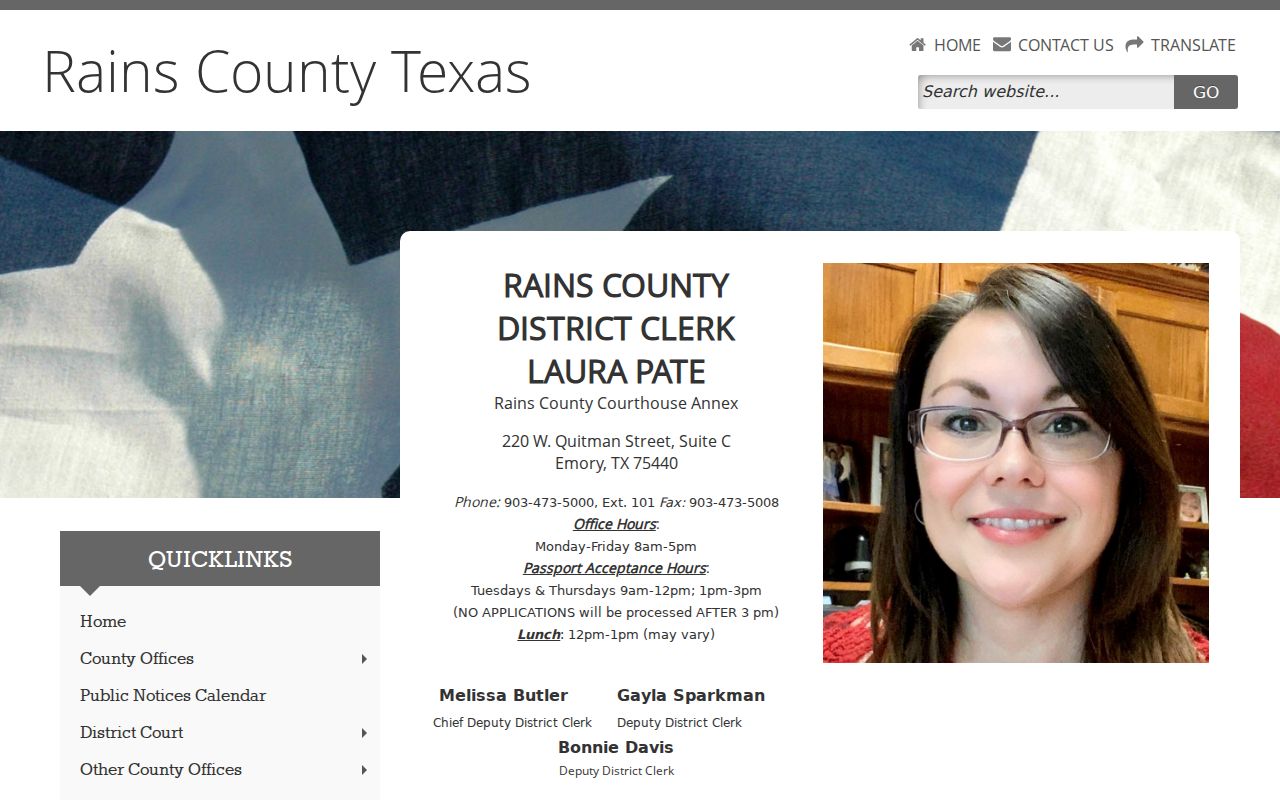
That county source connects a Rains County felony case search to the custodian who can supply the filed pleadings and certified disposition.
Rains County Case Record Searches
Begin with the county-linked LGS Online Records Search. It serves more than one county, so select Rains before choosing an available court or records module. The live controls can change by county configuration. A name or cause number may locate an index entry, but the clerk remains the source for copies. The re:SearchTX service adds a statewide e-filing and document channel. Registration, court participation, document access, and fees can differ by user role and court.
- Select Rains County and the criminal or court module that the live LGS screen offers.
- Search the legal name, using first and middle names to narrow a common surname, or enter the cause number.
- Review the court name, filing date, charge, and hearing entries before treating the result as the right case.
- Compare the entry with the county's posted docket and, when useful, check re:SearchTX for available e-filed documents.
- Ask the correct clerk for inspection, plain copies, or a certified judgment, giving the cause number and document titles.
The Rains County LGS controls documented during research are:
| Field Label | Type | Required | Notes |
|---|---|---|---|
| County | Dropdown | Yes | Select Rains from the multi-county list |
| Search or record module | Tab or dropdown | Yes | Options depend on the current county setup |
| Last Name or Business Name | Text | Usually | Try each legal spelling or name variant separately |
| First and Middle Name | Text | No | Use these fields to narrow the results |
| Case Number | Text | Alternative | The strongest search key when known |
| Date Range | Date fields | No | May filter filing or record dates when exposed |
Rains County Dockets Change Daily
Rains County publishes criminal schedule information, which is especially useful in a small court system. Yet a docket is a calendar snapshot, not a final case history. County Court criminal pretrial settings are generally held at the Annex beginning at 9:00 a.m., and the county warns that posted dockets may change each day. A reset, plea, dismissal, or new setting can alter what happens after the PDF was made.
The official Rains County criminal dockets page is the source for those changing schedule documents.
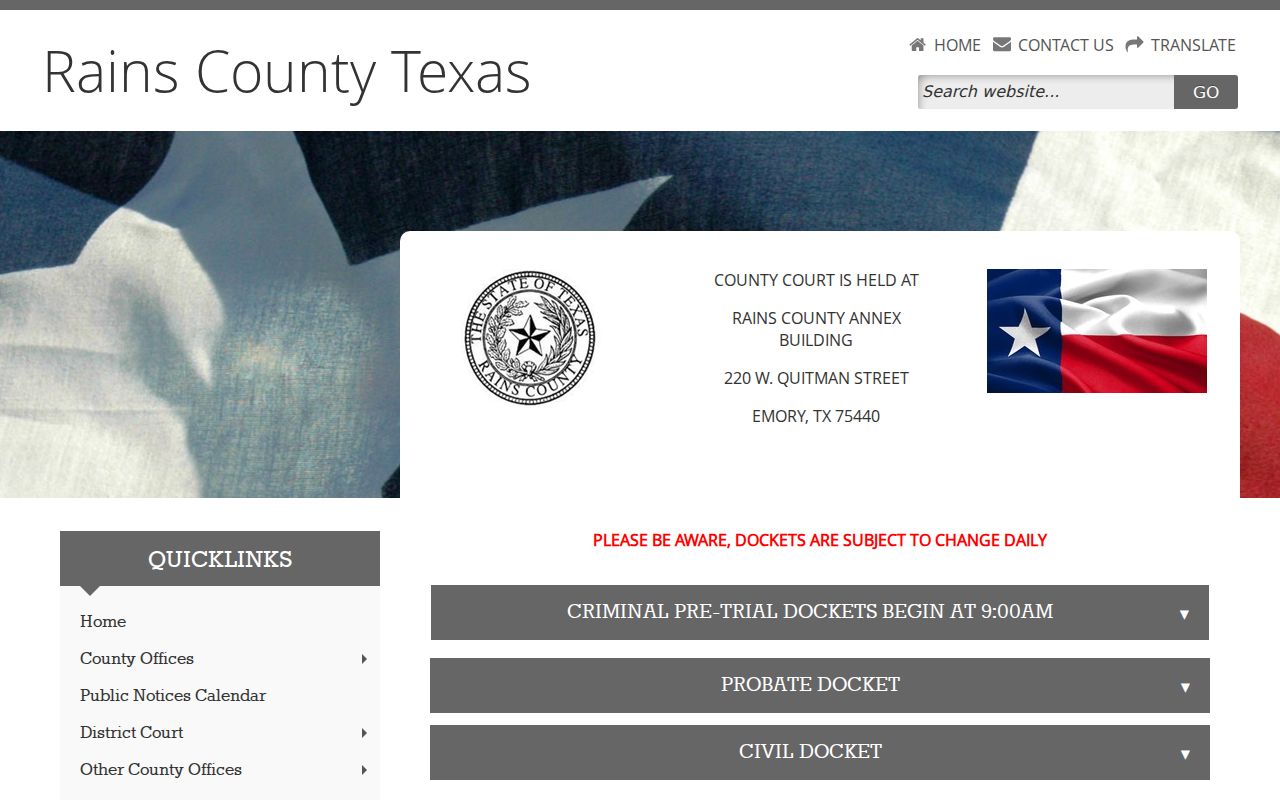
The published layout labels County Court material as a criminal pretrial docket and lists scheduled case and party rows, but a same-day call to the clerk is wise before travel.
What a Criminal Case File Contains
A Rains County criminal case file documents what the prosecutor filed and what the court did. That differs from an arrest report, which records the investigation and initial arrest basis. Charges can be declined, reduced, enhanced, dismissed, or replaced before they reach the final judgment. Searchers should compare the defendant identifiers, court, and cause number, then read the signed disposition rather than relying on a charge label alone.
| Cause Number and Court | Identifies the specific proceeding and the Rains County court that controls its file. |
|---|---|
| Charging Document | A complaint and information may charge a misdemeanor; an indictment may charge a felony. |
| Docket Entries | Record filings, settings, notices, motions, pleas, and orders in date order. |
| Hearing Details | May list the date, time, hearing type, attorneys, prosecutor, status, and bond information. |
| Disposition and Judgment | Shows whether the filed case ended in dismissal, acquittal, deferred adjudication, or conviction. |
| Sentence and Conditions | States confinement, fine, supervision, or other terms imposed by the court when applicable. |
Public views should omit protected victim data and sensitive personal identifiers. A missing document may reflect restricted access, a scanning gap, or portal coverage rather than proof that no document exists.
Rains County Court Terms Explained
Short labels on a Rains County docket can mislead a reader who treats each one as a result. The label “ARR” means arraignment, the hearing where the accused is advised of the charge and a plea may be addressed. It does not mean a new arrest. “Pretrial” identifies a stage for motions, settings, negotiation, and trial preparation. Neither term by itself states the final outcome.
- Information
- A formal charging paper commonly used for a Class A or B misdemeanor.
- Indictment
- A felony charge returned by a grand jury after prosecutor review.
- Deferred adjudication
- A result in which the judge withholds a guilt finding while the person completes supervision.
- Disposition
- The case outcome, such as dismissal, acquittal, deferred adjudication, or conviction.
- Judgment
- The signed court document that records the ruling and sentence when one is imposed.
A dismissal is not the same as an expunction. It may remain visible unless the record qualifies for relief under Texas law and a court grants it.
Criminal Case Stages in Rains County
After an arrest or summons, a person who is held must be taken before a magistrate without needless delay and generally within 48 hours under Texas Code of Criminal Procedure Chapter 15. The prosecutor then reviews the agency referral. A misdemeanor proceeds through a complaint and information, while a felony normally requires a grand-jury indictment. The filed case follows hearings and motions toward a plea or trial. Judgment, sentence, and any appeal come later. The clerk then reports the disposition into the Texas criminal-history reporting system.
Case flow: Charges Filed › Arraignment › Pretrial › Plea or Trial › Disposition › Sentencing
The Rains County Attorney and District Attorney office receives law-enforcement referrals for felonies and county misdemeanors. This review explains why the charge in a court file may not match the charge entered during booking. The clerk records the case that was actually filed.
Rains County Cases Missing Online
An empty portal result is not a final answer. First check the spelling, name order, court module, and filing year. Next identify the offense level. A Class C matter may remain with the Rains County Justice Court or a city municipal court, while a felony belongs with the District Clerk and a Class A or B misdemeanor with the County Clerk. Older documents and items withheld from a public view may still be available through the clerk.
Contact the correct office with the defendant's full name, approximate filing year, cause number if known, and exact document request. Ask whether inspection, plain copies, or certified copies are available through the method the clerk authorizes. Clerk staff can locate and copy a file, but they cannot give legal advice or conduct open-ended judicial research. The broader Rains County criminal history trail may help distinguish an arrest record from the later court case.
Rains County Portal or Certified File
The online index answers a fast question: does a likely case entry exist, and which court appears to hold it? A certified file answers a different one. It can establish the court's signed outcome and preserve the clerk's authentication. That distinction matters when a DPS history lacks a disposition or when a booking charge differs from the charge that was filed.
The Rains County Clerk page identifies the misdemeanor custodian and its copy policy.
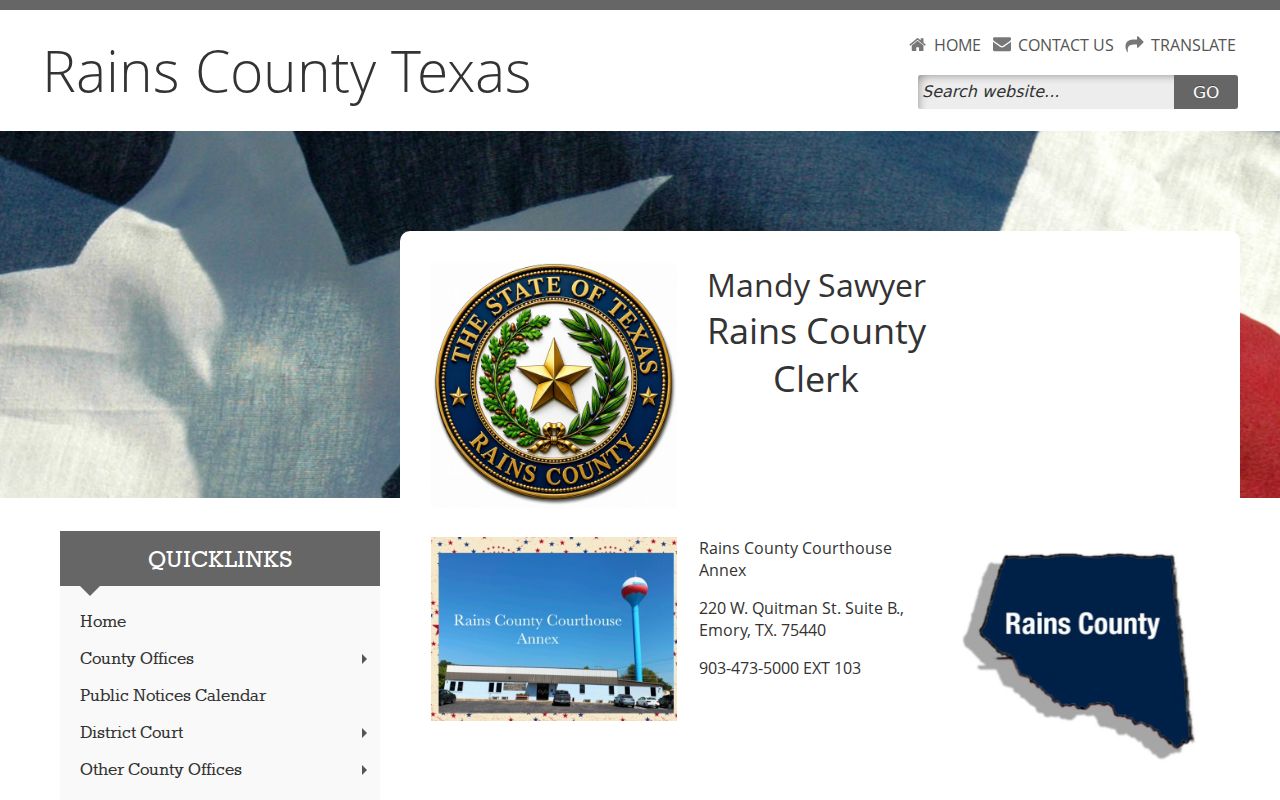
County Clerk guidance notes that only the District Attorney and the defendant's attorney of record at the time of the offense avoid copy charges in misdemeanor cases. Request a quote rather than assuming a price.
| Source | Best Use | Main Limit |
|---|---|---|
| LGS index | Find a likely Rains County case and cause number | Not a certified court record |
| Posted docket | Check an upcoming setting or hearing label | May change daily |
| Clerk copy | Read the filed document or signed order | Protected data may be redacted |
| Certified disposition | Document the court's formal outcome | Must come from the proper clerk |
Access Rules for Case Records
Many Rains County criminal court records are open, but public access has limits. Sensitive victim information, Social Security numbers, driver's-license details, medical information, and protected juvenile material may be removed or withheld. Family Code Chapter 58 gives juvenile records a separate confidentiality framework. A public portal can also show less than the paper or imaged court file. The absence of detail online does not authorize a clerk to release confidential material.
Texas Government Code Chapter 411 controls much criminal-history dissemination and orders of nondisclosure. Code of Criminal Procedure Chapter 55 governs expunction. Those forms of relief differ: expunction can direct agencies to return or destroy qualifying records, while nondisclosure blocks ordinary public release but preserves access for listed agencies. Neither result should be inferred from a missing search hit.
For the most sound result, keep the cause number, obtain the signed final order, and ask for certification when formal proof is needed. If DPS has no court outcome, the certified disposition supplies evidence for its correction process. The arresting agency cannot rewrite a court judgment, and the court clerk cannot alter the underlying police report.
Note: Confirm every portal result with the Rains County clerk that maintains the original criminal case before relying on its status.