
Rains County Criminal History Checks
Begin with the record closest to the event. Felony case files belong to the District Clerk, Class A and B misdemeanor files belong to the County Clerk, and fine-only cases remain with the municipal or Justice Court that heard them. The county-linked LGS Online Records Search can help locate an index entry, but its result is not a certified disposition. A reader who needs recent custody information should call the Rains County Jail because the county does not publish an official online roster.
Names alone can mislead. Gather the full legal name, birth date when lawful to use, spelling variants, incident or cause number, likely year, and the agency shown on any citation or release paper. Then work from the narrow local record toward statewide sources. The sequence below helps separate an initial allegation from the court's final action.
- Identify the agency, court level, and likely record type.
- Search the county index by name or cause number.
- Ask the correct clerk or agency to confirm the match.
- Request the docket sheet, booking sheet, or signed final order.
- Use a DPS name search or fingerprint self-review for the statewide layer.
One county search screen links these first steps. The LGS Online Records Search is the source shown here.
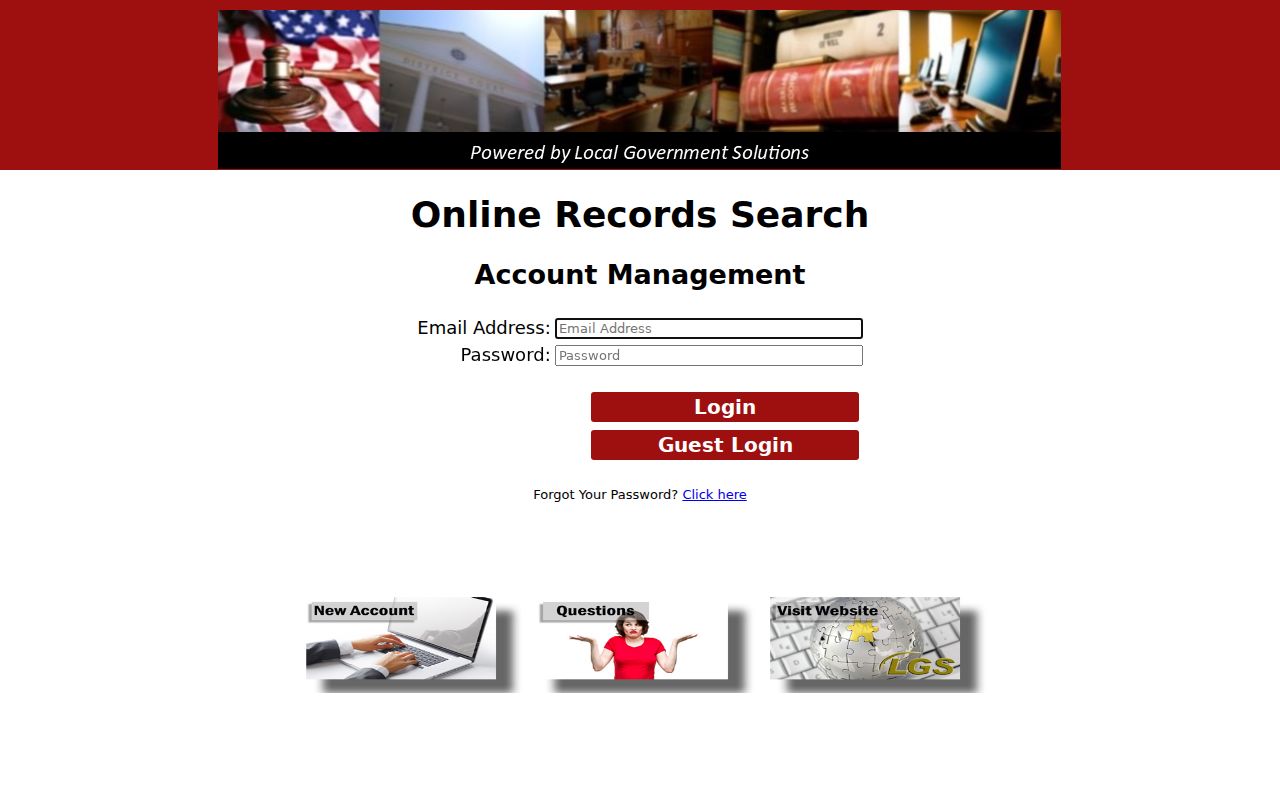
The screen is an entry point. Confirm the court, cause number, and final order with the clerk before treating a name hit as the right person or a complete outcome.
Rains County Record Portal Limits
The vendor portal serves more than one county and may expose different modules after Rains is selected. Search controls can also change. A cause number is the best key when one is known. Otherwise, use a legal surname, given name, middle name, and a sensible date range. Try spelling variants separately instead of widening the query until unrelated names fill the result list.
Portal entries are useful leads, not certified proof. District Clerk Laura Pate confirms felony files, while County Clerk Mandy Sawyer confirms Class A and B misdemeanor files. Municipal and Justice Court matters may never appear in the same module. That split is why a blank result should lead to a clerk call, not a firm claim that no case exists.
| Search field | Use | Practical note |
|---|---|---|
| County | Select Rains | The portal serves several counties |
| Record module | Choose the offered court set | Options vary by configuration |
| Last or business name | Main name key | Try legal spelling variants |
| First and middle name | Narrow a match | Middle names may not be present |
| Case number | Direct case key | Best choice when known |
| Date range | Limit filing years | Availability depends on the module |
Official Background Checks in Texas
The Texas Department of Public Safety, Crime Records Division, keeps the central Computerized Criminal History repository. Its public Criminal History Name Search reports public conviction and deferred-adjudication information that DPS may release. The product requires an account and prepaid credits. It is broader than one Rains County court index, yet it is still name-based and may return a similar person or miss a record.
For review of one's own Texas history, fingerprints provide the stronger identity match. DPS uses Fingerprint Applicant Services of Texas, or FAST, through IdentoGO by IDEMIA. The appointment process joins fingerprints to the subject's identity rather than relying on a typed name. The official DPS name-search portal illustrates the public product.
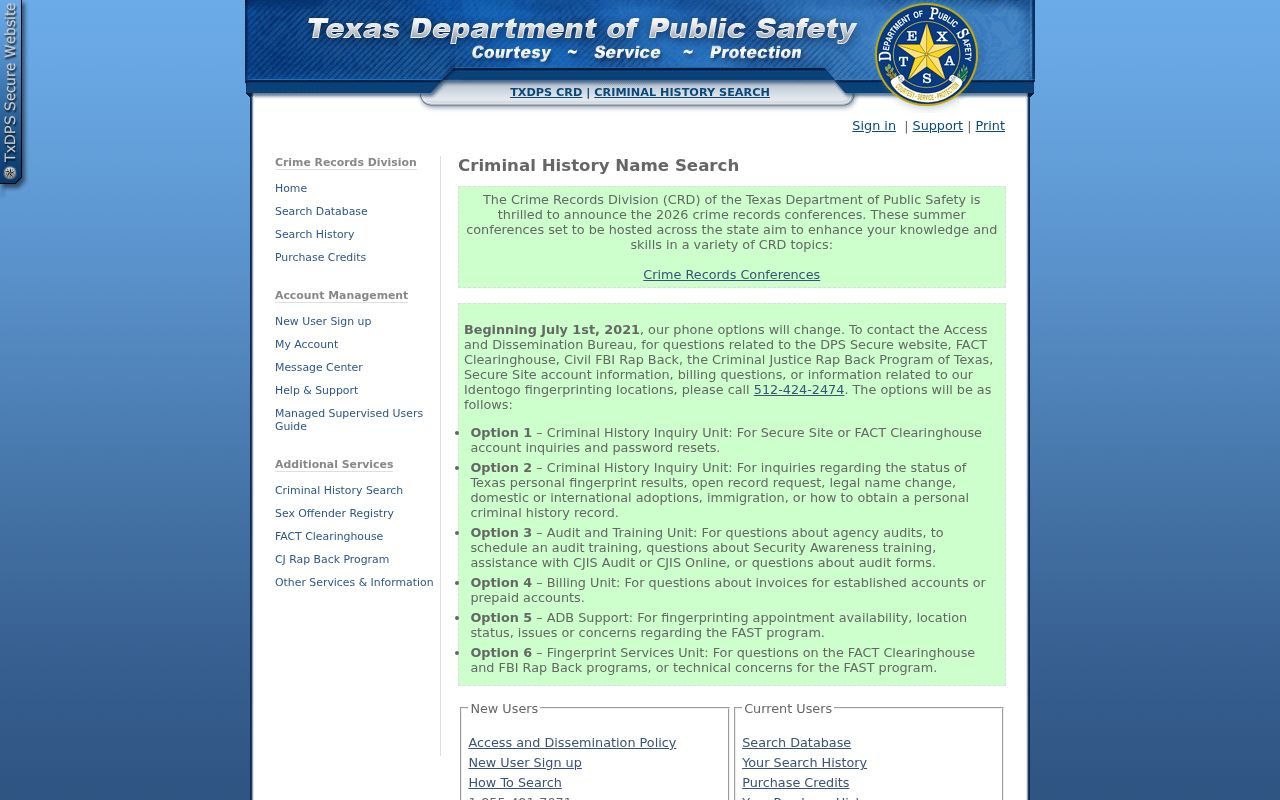
Use that product for its stated public scope. A certified Rains court disposition and a fingerprint self-review answer different, often more precise questions.
Rains County Fingerprint Record Review
No verified FAST enrollment center was found inside Rains County. Search the scheduler by Emory ZIP code because vendor and mobile locations can change. DPS lists a $15 fingerprint record-review charge and a $10 FAST electronic capture charge. Two hard fingerprint cards alone cost $20 at FAST, while a law-enforcement agency may charge up to $10 per card.
The official IdentoGO enrollment page starts appointment selection and displays the current identity-document instructions.
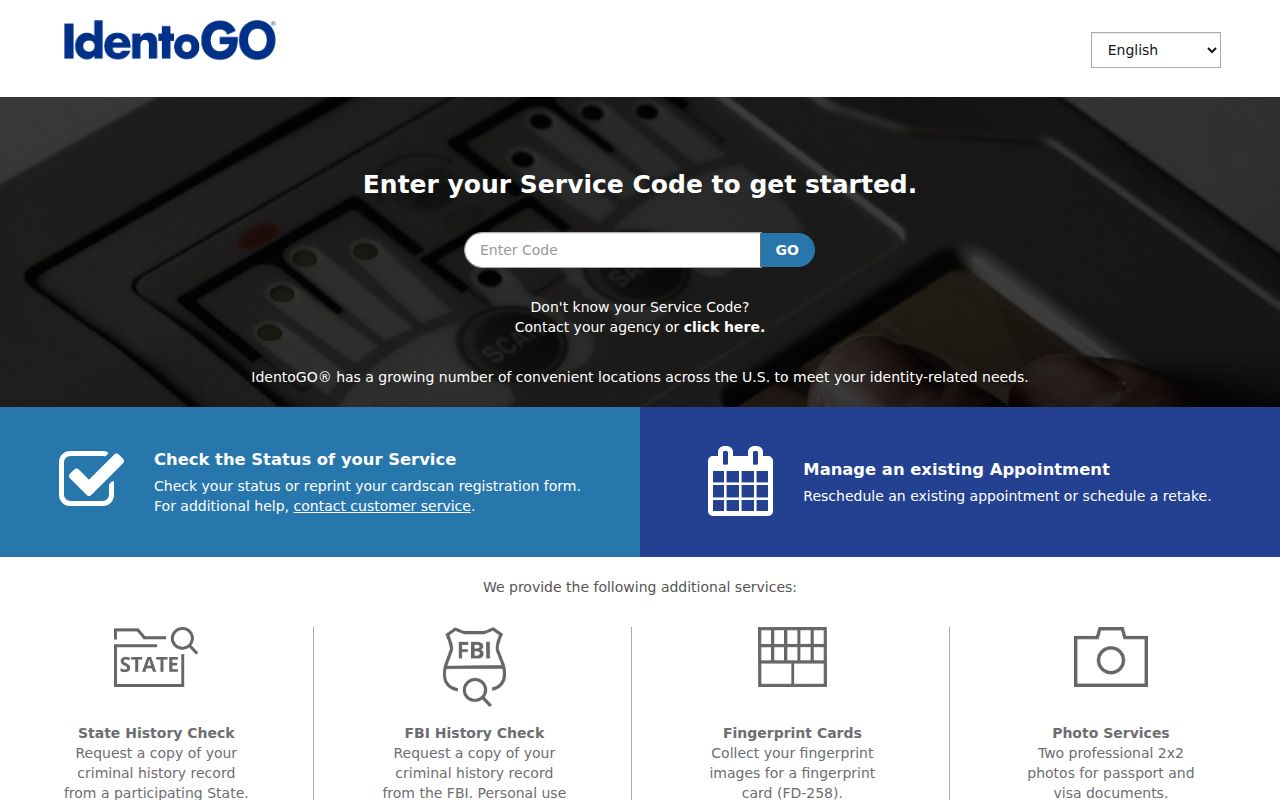
Keep the transaction receipt and follow the DPS personal-review service instructions. The fee table separates the state review from capture or card costs.
| Service | Research-listed amount |
|---|---|
| DPS offline name check | $10 |
| DPS fingerprint record review | $15 |
| FAST electronic fingerprint capture | $10 |
| Two FAST hard cards | $20 |
| Local law-enforcement fingerprint card | Up to $10 per card |
Kinds of Criminal Records
A single event can create several Rains County records. The investigating agency writes an incident report. If custody follows, the jail creates a booking record. A prosecutor may then file a charge that differs from the intake charge. The clerk records hearings and the final result, while DPS receives fingerprint-linked arrest and disposition submissions for reportable offenses.
Each source should be read for its own role. A police report describes an investigation, not guilt. A jail record describes intake and custody. A court file is the local source for the filed allegation and disposition. A warrant commands an arrest or enforces a court event, while supervision and registry records arise from separate legal duties.
- Incident report: the responding agency's account of an event and investigation.
- Booking record: intake identity, charge, bond, agency, and custody data.
- Court case: filed charge, hearings, plea, judgment, sentence, or dismissal.
- DPS history: reported fingerprint-linked cycles and dispositions within release rules.
- Warrant or capias: an issuing court's command, not a conviction.
Rains County Records at Two Suites
The Courthouse Annex makes the clerk split clear. Suite C houses the District Clerk and felony records for the 8th Judicial District Court. Suite B houses the County Clerk and Class A and B misdemeanor files for County Court. Both are at 220 W. Quitman Street in Emory, but sharing a building does not merge their indexes, files, or certification duties.
Fine-only Class C matters stay lower. A city citation belongs with the issuing municipal court, while a county Class C matter may sit with Rains County Justice Court. The county's official Justice Court page supplies that office's current forms and contact path.
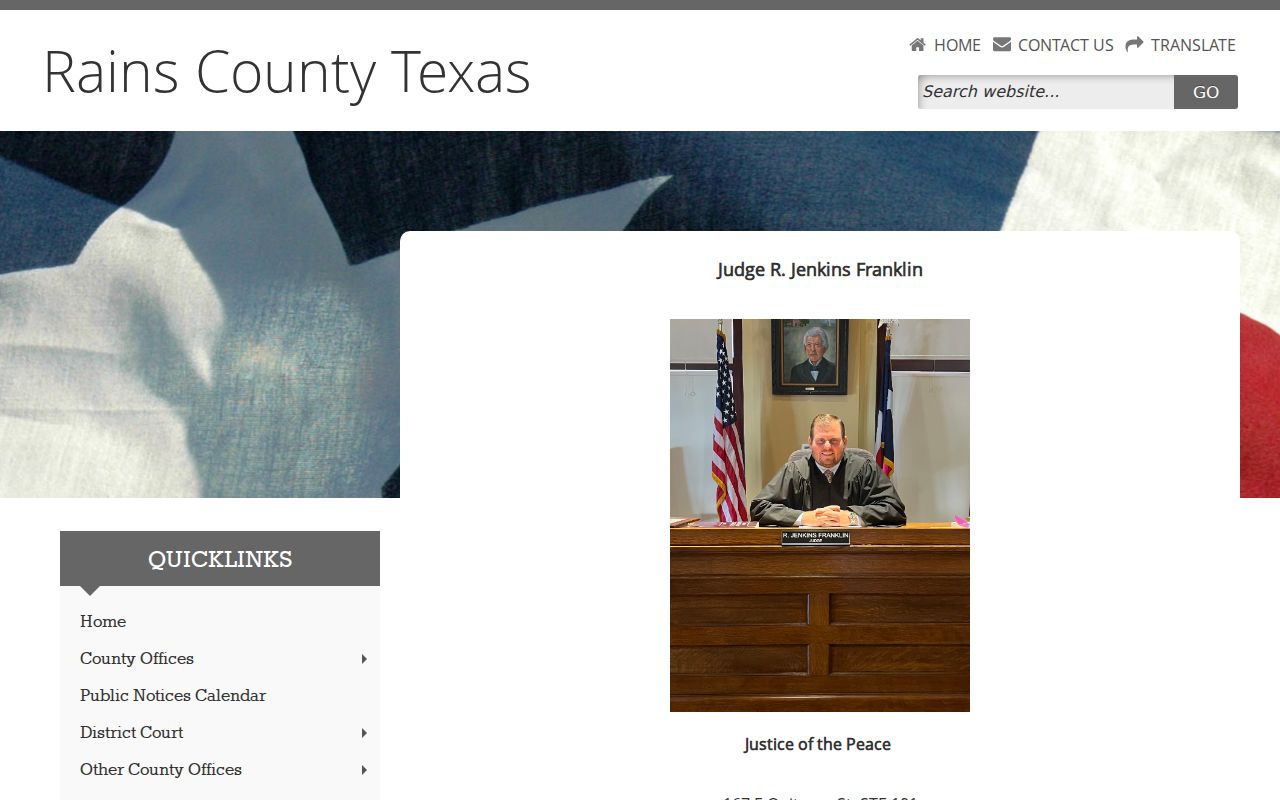
This level matters when a name is missing from a felony or misdemeanor search. Start with the court printed on the citation before moving to another clerk.
District Clerk
Laura Pate, Suite C
220 W. Quitman St.
Emory, TX 75440
903-473-5000 ext. 101
County Clerk
Mandy Sawyer, Suite B
220 W. Quitman St.
Emory, TX 75440
903-473-5000 ext. 103
Rains County Criminal Records: What They Contain
Compare identifiers before linking a result to a person. A Texas repository cycle can include a legal name, aliases, birth data, state identification number, fingerprint transaction references, arrest date, tracking number, arresting agency, offense, prosecutor action, court, cause number, disposition, sentence, and custody events. The public DPS name product omits restricted non-conviction details.
Charges can change from one source to the next without any record being wrong. The booking line reflects intake. The prosecutor may decline, reduce, enhance, or replace it. The final signed judgment or dismissal shows what the court did.
| Name and identifiers | Legal name, aliases, birth data, SID, and transaction references where public |
|---|---|
| Arrest and booking | Date, agency, tracking or booking number, intake charge, bond, and custody |
| Filed charge | Complaint, information or indictment, offense text, and statute |
| Disposition | Dismissal, acquittal, plea, deferred adjudication, or conviction |
| Sentence | Custody, fine, community supervision, and court conditions |
| Reporting status | Whether the clerk's outcome reached the DPS repository |
Rains County Booking Record Chain
The Rains County Sheriff's Office and Jail share 313 E. North Street in Emory. Sheriff deputies create their agency reports there, and the jail records intake. City police reports remain with the city even if the person is booked by the county. A DPS trooper report stays with DPS. This source split explains why requesting every item from the jail can produce only part of the event.
The official sheriff page identifies the records contact, jail address, and current command structure.
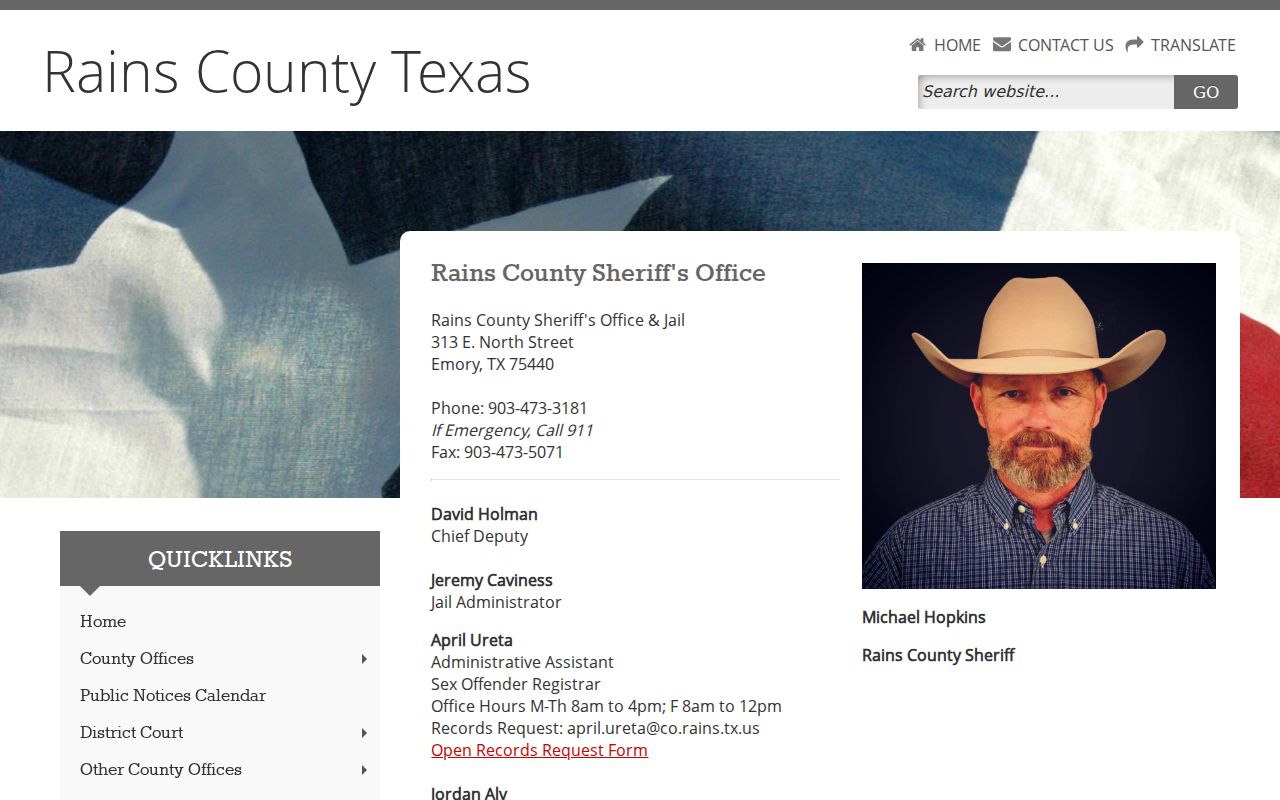
April Ureta accepts records requests through the published county email. Name the report, booking sheet, dispatch entry, audio, video, or photograph sought, then provide a date range, location, involved name, and known number.
Record flow: arresting agency › Rains County booking › prosecutor review › correct court clerk › Texas DPS repository.
Texas Public Access Laws
The Texas Public Information Act governs many agency records, but exceptions protect active investigative detail and confidential material. Government Code Section 552.108 can cover specified law-enforcement information, while subsection 552.108(c) preserves basic information about an arrested person, an arrest, or a crime. Judicial case records follow court rules and open-courts principles, so send a copy request directly to the proper clerk.
Public access does not make every data field public. Victim identity, juvenile information, medical details, driver's-license data, and personal identifiers may be withheld or redacted.
Key Texas laws:
Government Code Chapter 552 governs public-information requests and exceptions.
Government Code Chapter 411 controls criminal-history confidentiality and public conviction or deferred access.
Code of Criminal Procedure Chapter 66 governs criminal-history reporting.
Code of Criminal Procedure Chapter 55 sets Texas expunction rules.
Family Code Chapter 58 restricts juvenile justice information.
Rains County Jail Record Fallbacks
Rains County publishes no official jail roster, booking blotter, warrant search, or law-enforcement mobile app. That is an access fact, not a reason to substitute a mugshot site. For current custody, call the jail at 903-473-3181 with the person's full legal name and birth date. Ask whether a booking exists, whether bond information is available, and how to request the booking sheet.
Three sources cover three custody stages. RCSO handles a local pretrial booking. Texas VINE sends custody and release notifications. The TDCJ Inmate Information Search covers people in sentenced state custody, not the county jail. The official TDCJ locator shows the state-prison search layer.
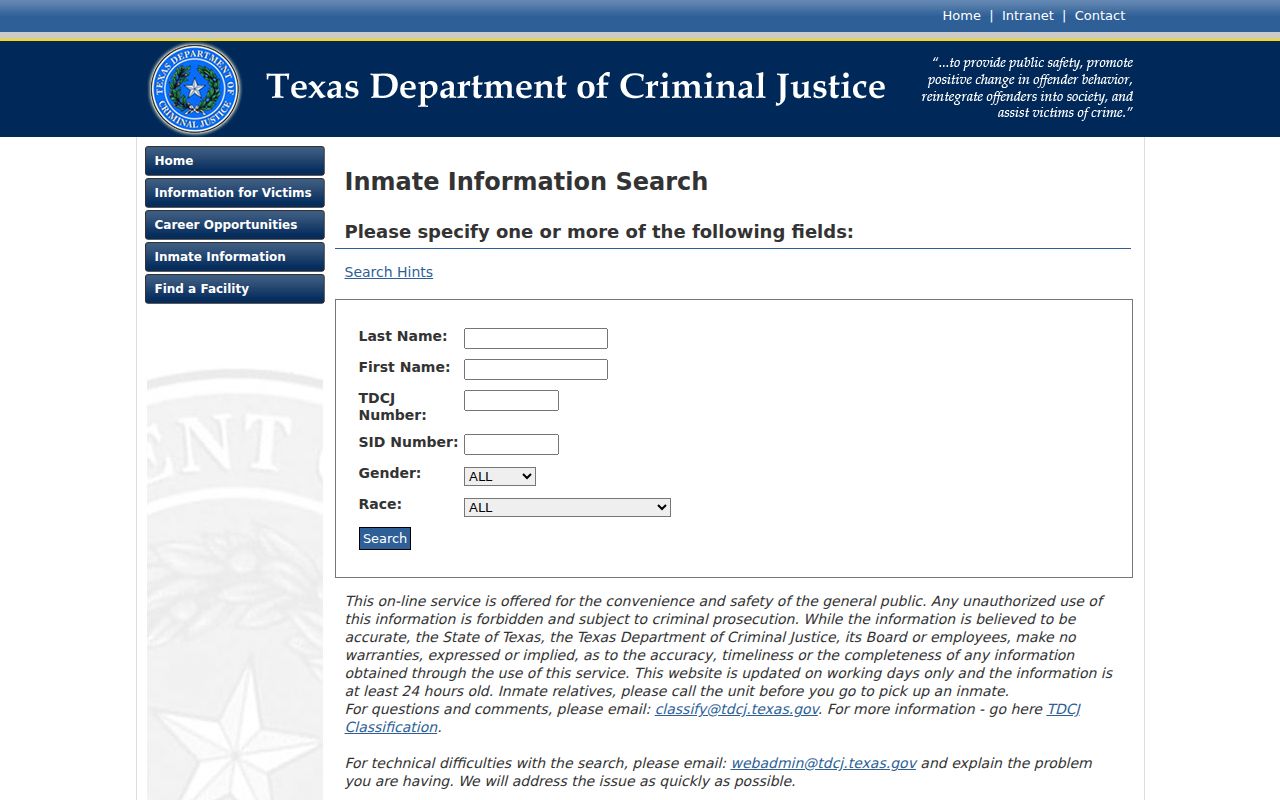
Its results may show a TDCJ or SID number, unit, sentence, offense, county of conviction, and release information. None of those fields confirms a new Rains County Jail intake.
Note: Call the jail before sending mail or money because the official county page does not publish current vendor, deposit, or visitation rules.
Restricted, Sealed & Expunged Records
Texas expunction and nondisclosure are different remedies. A Chapter 55 expunction can direct named agencies to return or destroy records for qualifying arrest cycles. Eligibility may involve an acquittal, pardon, identity theft, no-bill, or defined dismissal after statutory conditions are met. One ineligible charge in the same arrest cycle can affect relief.
An order of nondisclosure under Government Code Chapter 411 limits ordinary public release but keeps access for listed agencies. Rains County Clerk publishes a $350 nondisclosure filing fee. A misdemeanor filing goes to County Court, while a felony filing belongs in District Court. A dismissal alone does not erase the arrest, booking entry, or accurate DPS history. Juvenile records follow separate Family Code rules.
Rains County Record Terms Explained
Short docket labels can change the meaning of a search result. Rains County criminal dockets use “ARR” for arraignment, the hearing at which the charge and plea are addressed. It does not mean a new arrest. Likewise, deferred adjudication is not the same as a dismissal, and a dismissal is not an automatic expunction.
The terms below help align a portal entry with the signed file.
- Arraignment
- A court stage for the formal charge and plea.
- Disposition
- The court's recorded outcome, such as dismissal, acquittal, deferred adjudication, or conviction.
- Capias
- A court command to take a person into custody after a case event.
- Deferred adjudication
- Supervision imposed while the court withholds a finding of guilt.
- Certified disposition
- A clerk-certified copy of the final outcome used as reliable proof.
Rains County Warrant Record Sources
No single official countywide warrant page covers every issuing court. Ask RCSO about county execution information, District Clerk about a felony capias or docket, County Clerk about a misdemeanor warrant, and the Justice or municipal court about its own fine-only case. A warrant may be sealed before execution, so phone staff can limit what they confirm.
Do not try to clear a warrant through a data vendor. Contact the issuing court, provide the cause or citation number, and ask about appearance, bond, balance, or counsel options. Keep written orders and receipts because updates may not reach every system at the same time. The search is about the issuing authority, not just the name on the warrant.
Correcting Rains County Criminal Records
A missing disposition and a legally visible dismissal call for different responses. If DPS lacks the final result, obtain a certified disposition from the clerk that handled the case and follow the Crime Records Division correction process. Court clerks report dispositions to DPS, and a submission may never arrive or may be returned for an error.
If the record accurately shows an arrest and dismissal, correction will not erase it. That question may require analysis of expunction or nondisclosure eligibility. Start with a fingerprint self-review and the signed court order. Preserve the incident number, booking number, DPS tracking data, and cause number because each belongs to a different part of the record chain.
Rains County Supervision Records
The 8th Judicial District Community Supervision and Corrections Department serves Rains and nearby counties. A court judgment can show that community supervision was ordered, but officer notes and detailed supervision files are not a general public lookup. A motion to revoke or a motion to adjudicate is an allegation until the court rules on it.
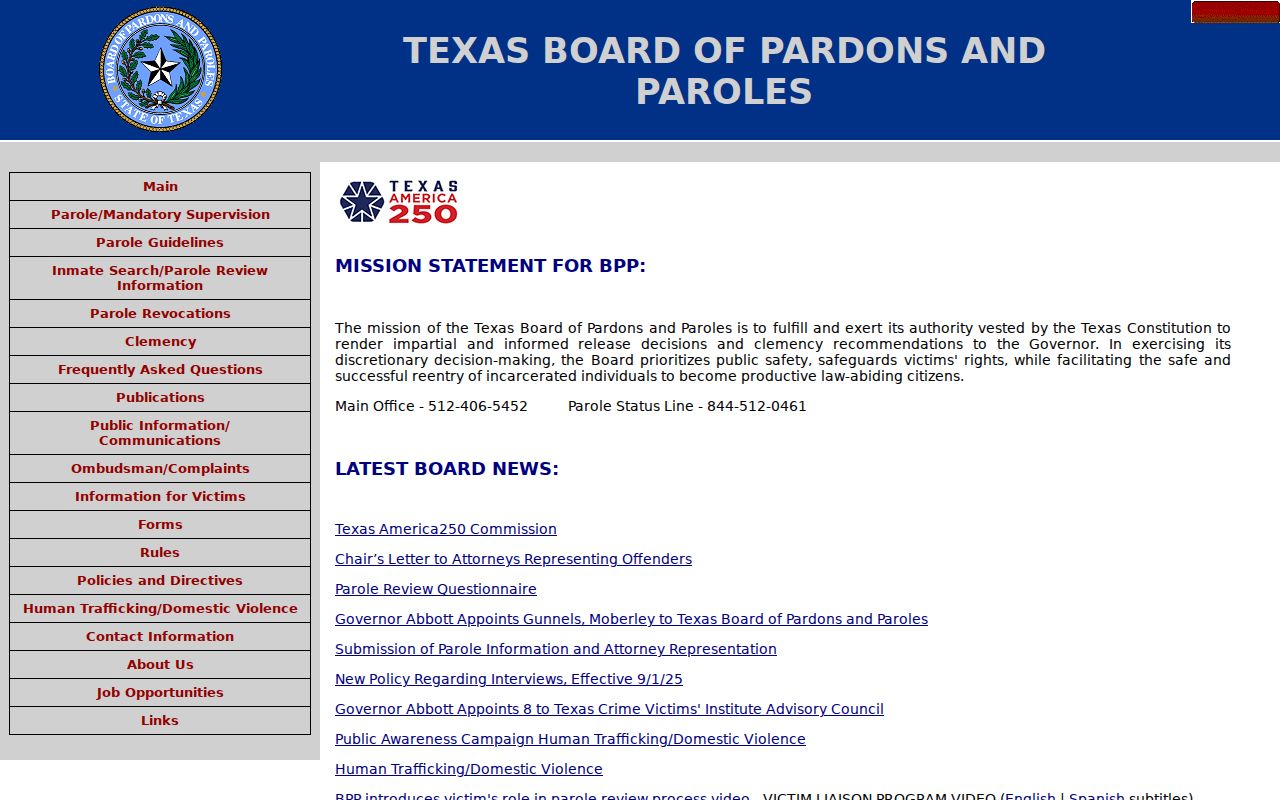
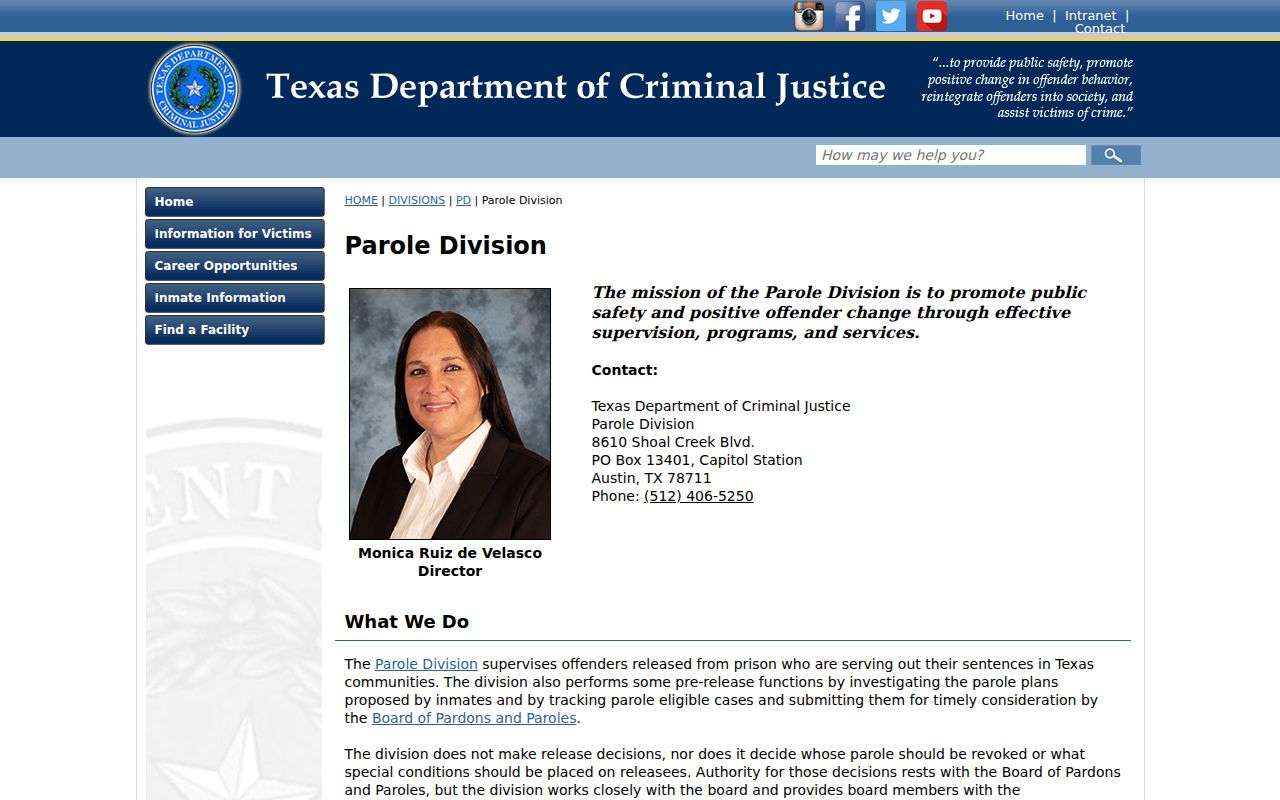
Parole is state-run. The Texas Board of Pardons and Paroles makes release decisions, while TDCJ Parole Division supervises people after release. The Board's official page provides the decision-side source.
The TDCJ Parole Division page shows the separate supervision-side source.
A clerk file proves the sentence. TDCJ sources address state custody or parole status, while Texas VINE handles custody notifications rather than probation case details.
City-by-City Criminal Records in Rains County
City limits change the first custodian. Emory and East Tawakoni maintain city police and municipal court channels. Point requires a current agency check because its law-enforcement staffing changed in 2026. A city police report remains with the city even when RCSO handles booking, and a fine-only city case does not become a County Clerk or District Clerk file.
These three incorporated cities lead the county's population ranking based on the 2020 Census baseline used in the research. Each local page follows the city report, municipal case, county booking, and offense-level court routes without treating them as one database.
Emory Record Check
About 1,251 residents in 2020. City police and Municipal Court start the local route.
East Tawakoni Record Check
About 883 residents in 2020. The city has its own police and scheduled Municipal Court.
Point Record Check
About 809 residents in 2020. Confirm the responding agency based on the incident date.